

The World’s First Casino: Origins & How Affiliates Can Turn It into Smart Marketing Content
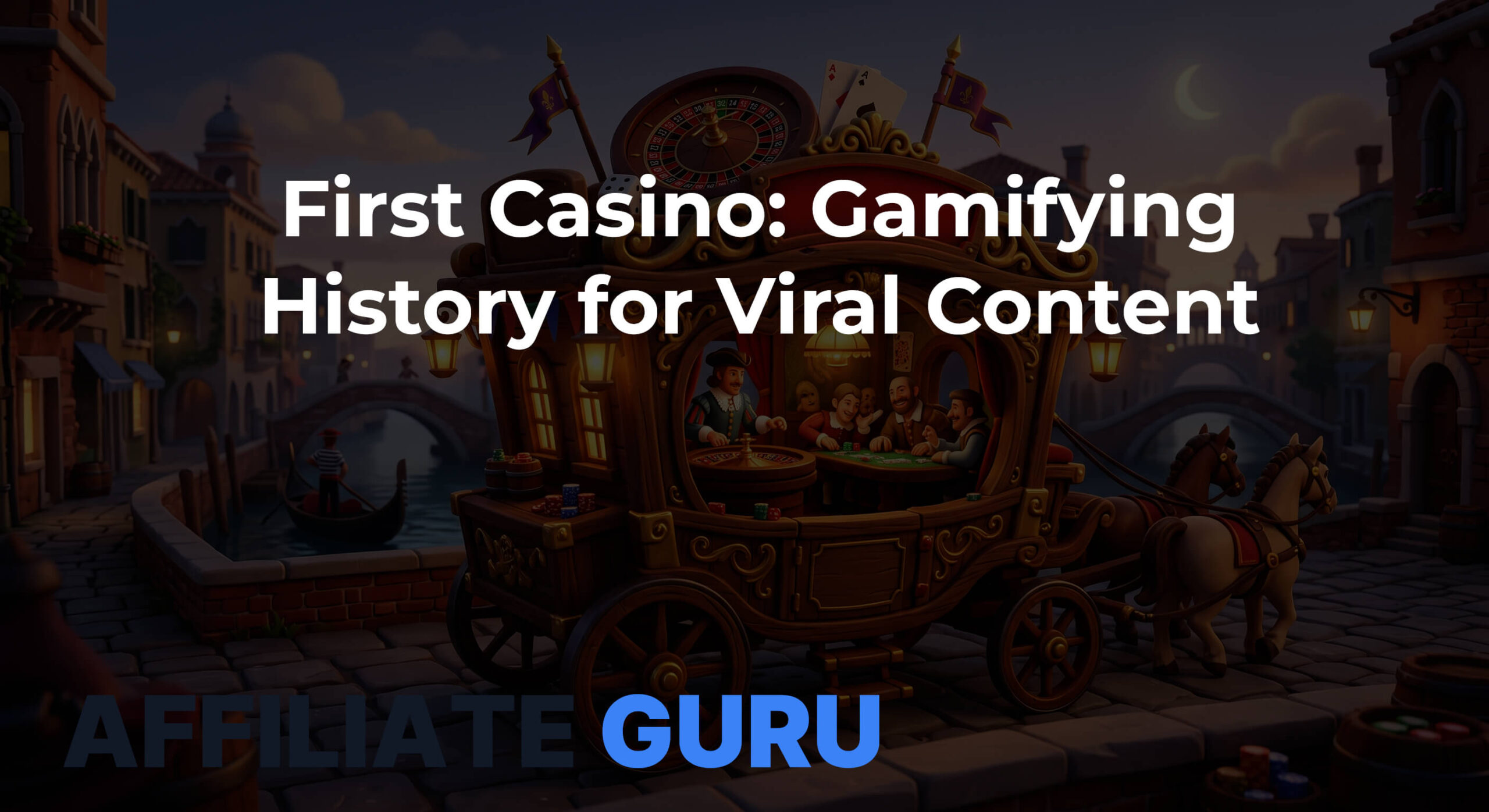
Fast forward almost four centuries, and casinos have transformed from gilded halls to sleek online platforms available in every pocket. The DNA, however, remains the same: structured games of chance, rules that build trust, and the promise of entertainment mixed with risk.
For affiliates, this history is more than trivia. It’s storytelling material that connects modern online casinos with their dramatic origins. And when you turn that story into blogs, visuals, and campaigns, it becomes a marketing tool that attracts attention and builds credibility.
A Brief History of the World’s Oldest Casinos
Il Ridotto, Venice (1638)
The Ridotto was more than just a gambling hall. It was a social experiment by the Venetian government, which wanted to control the games that until then happened in private clubs and during the carnival season. Only the nobility could enter, and masks were mandatory — they allowed people of different classes to sit at the same table without revealing their identity. Inside, everything was strictly regulated: fixed stakes, only approved games like biribi and bassetta, and even a dress code. In many ways, this was the prototype of modern casino licensing — the idea that gambling must be structured, legal, and trustworthy.
Casino de Spa, Belgium (1763)
In the eighteenth century, Spa was already a magnet for the European elite who came to “take the waters.” The Casino de Spa was built to combine wellness with entertainment, offering visitors refined gambling in a resort atmosphere. Over the centuries it burned down and was destroyed by wars several times, but each time it was rebuilt. That resilience turned it into a symbol of European cultural heritage. Today, it is still considered one of the oldest and most elegant gambling venues in the world.
Kurhaus Casino Baden-Baden, Germany (1824)
Baden-Baden was more than a spa town; it was a cultural and intellectual center. The Kurhaus Casino attracted aristocrats, politicians, and writers. Dostoevsky famously drew inspiration here for his novel “The Gambler,” after observing the intensity and obsession of the players. The Kurhaus was known for its lavish architecture and atmosphere, earning the nickname “the most beautiful casino in the world.” It showed that gambling could be not just an activity but part of high culture and intellectual life.
Monte Carlo Casino, Monaco (1856)
Monte Carlo turned the concept of a casino into a global brand. It was not just a gaming hall but a symbol of luxury and refinement, closely tied to yachts, haute couture, and the Mediterranean lifestyle. Classic James Bond films cemented its image as the ultimate high-stakes setting. More importantly, Monte Carlo became an economic engine for Monaco — proof that a casino could shape not only culture but also the financial destiny of an entire country.
How Affiliates Can Turn Casino History into Marketing Gold
The stories of Ridotto, Spa, Baden-Baden, and Monte Carlo aren’t just interesting facts — they’re content fuel. Here’s how affiliates can make history part of their funnel.
Content ideas
History gives you SEO angles that stand out from generic “best casino bonus” posts. Imagine an article titled “From Ridotto to Online Casinos: How Gambling Evolved” or a timeline infographic showing the path from Venice to mobile apps. It’s educational, link-worthy, and perfect for long-tail traffic.
Emotional branding
Visuals matter. A landing page styled with paintings of 18th-century halls and a tagline like “Play like it’s 1638” immediately separates you from cookie-cutter promo pages. Emails can do the same: “Know your casino roots — claim your bonus today.” History adds weight to your message.
Social storytelling
Short-form video is perfect for this. Think TikTok or Reels that start with an old casino hall and transition into someone tapping on a mobile app. It’s a quick way to connect past and present, wrapped in shareable storytelling.
Educational pre-landers
Simple trivia hooks work. A pre-lander that says “Did you know the first casino was state-run in Venice in 1638?” followed by a call to explore live blackjack or roulette ties history directly to offers. It builds curiosity before conversion.
Promo examples
- Blog: “Top 3 historical casinos that inspired today’s games + bonus code”.
- Telegram post: trivia fact + CTA link.
- Banner: “Play where modern casinos began” leading to an operator with classic card games or live casino offers.
This isn’t about random facts — it’s about weaving storytelling into your funnel to grab attention and build trust.
Affiliate Programs to Leverage
Once you understand how to weave history into your funnels, the next step is choosing the right affiliate programs. Not every offer matches a “classic casino” narrative, so you want brands that allow you to connect historical storytelling with modern products like live roulette, blackjack, or poker rooms.
1xPartners
This program is best known for sports betting, but it also has a strong casino section with table games, live dealer formats, and card classics. If you are building content around the Ridotto in Venice, which was originally about card games under strict rules, you can easily connect that theme with live blackjack or baccarat offers. For SEO campaigns, you might run an article like “From Venice to today: how card games shaped casino culture” and end with a CTA linking to those exact products.
Melbet Partners
Melbet has one of the broadest portfolios, covering everything from slots to poker to esports. That makes it perfect for historical storytelling because you can match each part of your content to a different vertical. A Baden-Baden inspired campaign could highlight refined table games, while a Monte Carlo themed page could promote high-roller slots or exclusive VIP rooms. For social campaigns, you could use visuals of old European casino halls, then transition to modern Melbet live tables.
VivatBet Partners
This program is more flexible when it comes to localized strategies, which works well with historical content. For example, if you are targeting audiences in regions where trivia and cultural storytelling perform better than pure bonus ads, you can build Telegram posts or short blog updates around “did you know” facts — and then link to VivatBet’s casino offers. The mix of sports betting and casino gives affiliates a chance to tie in multiple narratives, from the sporting elite in Baden-Baden to the glamour of Monte Carlo.
How to Connect Programs with Storytelling
- Use Ridotto’s theme of masks and exclusivity to frame live dealer games as “the modern masked ball.”
- Highlight Spa’s resilience and elegance in campaigns promoting long-term value offers like loyalty bonuses or cashback.
- Play on Baden-Baden’s cultural aura by pairing it with poker and intellectual games content.
- Channel Monte Carlo’s luxury image in high-stakes promotions, VIP programs, and premium slot offers.
When you integrate affiliate programs into storytelling, you don’t just push a banner — you build a narrative bridge between history and modern gaming. That makes your content feel unique, trustworthy, and much more memorable to the audience.
Conclusion
The history of gambling is not just a curiosity — it is a rich storytelling tool. From the Ridotto in Venice to Spa, Baden-Baden, and Monte Carlo, each place shows how casinos have always been about more than games. They stood for exclusivity, culture, resilience, and luxury. That context is exactly what affiliates can use to build stronger funnels and stand out from generic promo content.
Why History Resonates Across GEOs
- Europe
European players often value cultural heritage. Campaigns that highlight Baden-Baden’s connection to literature or Monte Carlo’s glamour align with audiences who appreciate sophistication and tradition. For this GEO, history-driven storytelling adds authority and prestige to offers. - Latin America
In Latin America, educational hooks work especially well. Trivia such as “Did you know the first casino was run by the Venetian government in 1638?” can be packaged into email campaigns or Telegram posts. For an audience that loves storytelling and cultural discovery, history becomes a bridge to entertainment offers. - Asia
In many Asian markets, cultural symbolism and storytelling visuals perform strongly. A campaign that contrasts the grandeur of old European casino halls with the sleekness of modern apps creates a sense of aspiration. Here, history is less about nostalgia and more about prestige, which pairs well with VIP and high-stakes offers. - Global Younger Audiences
Younger demographics respond to short, dynamic storytelling. A TikTok reel that morphs from an engraving of Monte Carlo into a live blackjack table speaks their language. History becomes not a lecture but a visual hook that connects quickly.
History and heritage give affiliates something that simple bonus codes cannot — emotion, context, and memorability. When you use stories of the first casinos to frame modern offers, you create campaigns that feel unique and trustworthy. In a crowded iGaming market, this difference is what drives higher engagement, better retention, and ultimately more revenue.