
The History of Slot Machines & How Affiliates Can Turn It into Compelling Content
For affiliates, this story isn’t just entertainment trivia. Understanding how slot machines evolved helps create content with more depth and authority. It gives campaigns a narrative hook, turning “claim your bonus” into something richer, like “from Liberty Bell to Megaways — here’s how slots got here, and here’s how you can play them today.” Historical context makes blogs more engaging, emails more clickable, and social content more shareable.
Key Stages in the Development of Slot Machines
- Sittman & Pitt (1891)
The story begins in New York, where Sittman & Pitt created a gambling machine based on poker. It had five drums with card symbols but no automatic payout system. Players inserted a nickel, spun the reels, and collected winnings directly from the bar owner if they hit a strong hand. This was more a novelty game than a true slot machine, but it set the foundation. - Liberty Bell (1894)
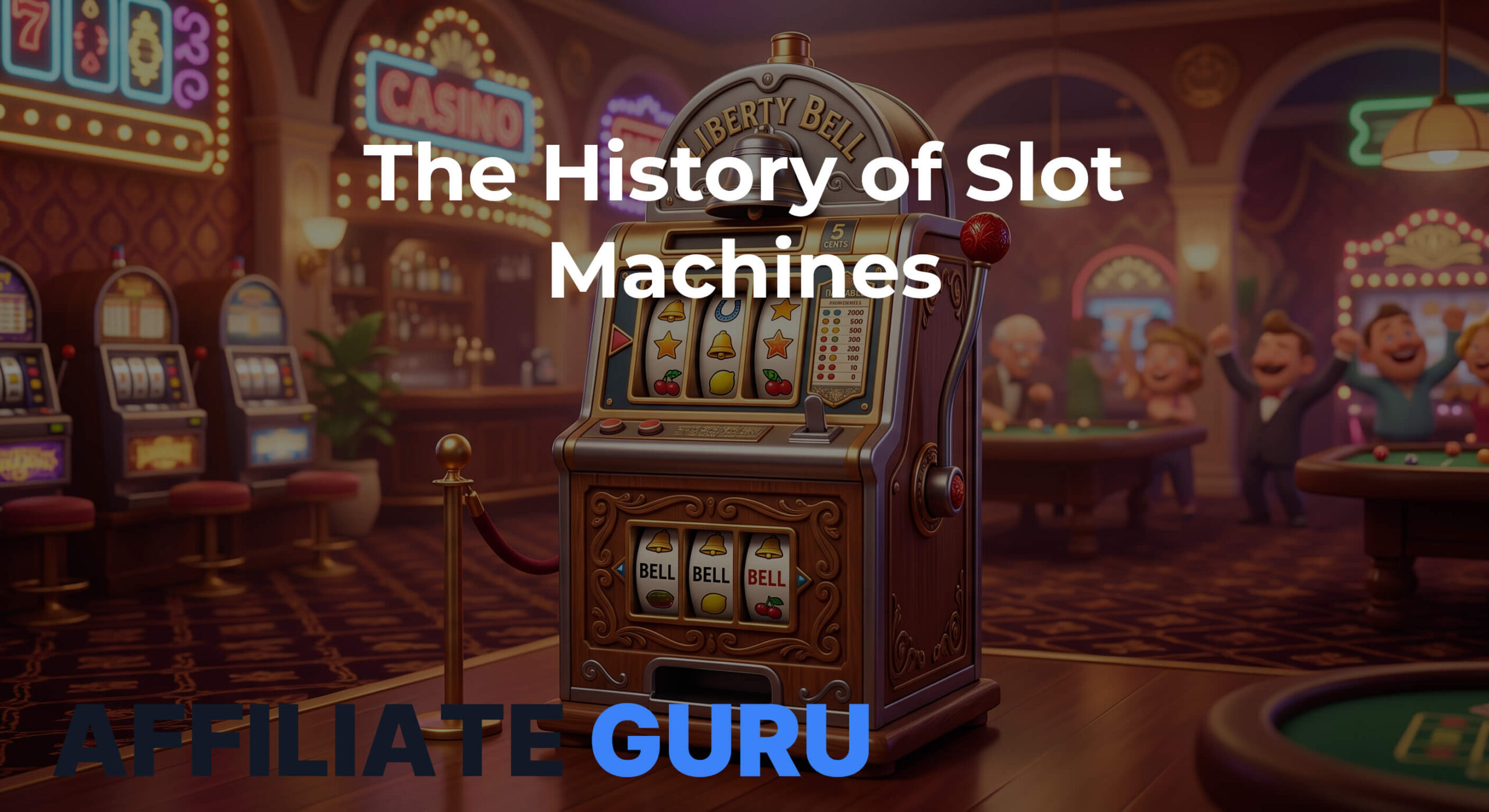
Charles Fey changed everything just three years later in San Francisco. His Liberty Bell machine introduced three reels and automatic payouts — a real breakthrough. Symbols like horseshoes, diamonds, spades, and the famous Liberty Bell became instant icons. Fey’s design was simple, reliable, and addictive, making it the blueprint for generations of slots. - Operator Bell (1907)
Herbert Mills took Fey’s concept and commercialized it on a larger scale. The Operator Bell introduced the fruit symbols (cherries, lemons, plums) and the BAR logo that remain staples of slot design even today. By placing machines in bars, tobacconists, and salons, Mills helped spread slots across America. - Money Honey (1964)
Fast forward to the sixties: Bally released Money Honey, the first electromechanical slot. This model could automatically pay up to 500 coins, combining the charm of traditional reels with electric power. It marked the shift from purely mechanical to technology-driven gaming. - Fortune Coin (1976)
Las Vegas then saw the birth of the video slot. Fortune Coin used a modified TV screen to display virtual reels. At first players were skeptical, but after Nevada regulators approved it, the concept quickly gained trust and popularity. - Reel ’Em In (1996)
WMS Industries pushed innovation further with Reel ’Em In, the first slot to feature a second-screen bonus round. Suddenly, slots weren’t just about spinning reels — they became interactive experiences with bonus games and new engagement mechanics. - Megaways (2016)
Finally, in 2016 Big Time Gaming launched Megaways. Instead of fixed reels, the mechanic randomizes the number of symbols per spin, creating hundreds of thousands of possible winning combinations. High volatility, big win potential, and constant variation made Megaways a global hit, redefining modern slot design.
How Affiliates Can Use Slot History in Content
The history of slots isn’t just for casino nerds — it’s a goldmine for affiliates. People love fun facts and trivia, and when you connect them to an offer, it feels less like selling and more like storytelling.
- SEO & blogs: Articles like “From Liberty Bell to Megaways” or “The evolution of slots in 7 steps” grab attention and stand out among generic “best bonus” posts. They’re also perfect for long-tail keywords.
- Comparisons: You can pit old-school fruit machines against modern Megaways. Add a CTA: “Try the classics with free spins or test the latest high-volatility slots.”
- Visuals: A simple timeline infographic or a TikTok reel showing Liberty Bell → Money Honey → Megaways with music works wonders. Quick, shareable, and memorable.
- Emails & push: Use trivia hooks. For example: “Did you know the first slots didn’t pay automatically? Now claim your free spins on modern classics.” It makes campaigns fun and clickable.
When you bring history into your content, you’re not just pushing promos — you’re giving your audience context and a story. And that makes them more likely to stick around.
Practical Examples for Affiliates
Slot history is flexible — you can spin it into blog posts, videos, email flows, or even ad creatives. Here are extended ideas to show how deep you can go:
Blog and SEO Content
- Top 5 Innovations: Write an article like “Top 5 innovations in slot machine history + special promo code for Megaways slots.” It’s educational but also anchored in offers.
- Comparisons: A blog post comparing classic fruit machines with modern video slots. End with a CTA: “Try a retro BAR slot with free spins, or test the volatility of Megaways.”
- Long-form guides: For SEO, create evergreen content such as “From Liberty Bell to Megaways: The Complete Evolution of Slot Machines.” These attract backlinks and rank for multiple long-tail keywords.
Video and Social Media
- Reels/TikToks: A 20-second clip that starts with Liberty Bell → cuts to Money Honey → finishes with Megaways on mobile. Add text overlays like “120 years in 20 seconds” and close with a promo.
- Trivia format: Post short Q&A videos like “Did you know the first slots didn’t pay automatically?” and drop an affiliate link in the description.
- Timeline animations: An animated infographic showing milestones with smooth transitions. Perfect for YouTube Shorts or Instagram Stories.
Email and Push Campaigns
- Trivia series: Send one fact per week.
- Week 1: Sittman & Pitt’s poker machine → bonus on retro slots.
- Week 2: Money Honey’s 500-coin payout → cashback offer.
- Week 3: Megaways launch in 2016 → free spins on Megaways titles.
- Seasonal tie-ins: Frame trivia around holidays. For example: “Liberty Bell launched in 1894 — claim your independence spins this July 4th.”
- CTA-driven design: Make trivia the opener, but always close with a simple action like “Spin now” or “Grab your bonus.”
Infographics and Interactive Content
- Static timeline: A clean infographic for Pinterest or Telegram showing 7 key slot innovations. Easy to share and saves you time on copy.
- Interactive landing page: Create a scroll-based page where each milestone (1891, 1894, 1964, 2016) expands into a fact + related offer. This doubles as storytelling and conversion funnel.
Ads and Banners
- Heritage hook: A banner with “From Liberty Bell to Megaways — spin the next chapter today.” Works well in display campaigns.
- Fact-driven creatives: Use simple trivia as copy: “Did you know the first slots had no automatic payout? Claim your spins on modern classics.”
These examples show how history can be repackaged across formats and platforms. The key is not to present it like a museum tour, but to connect every fact to an action: spin, claim, or sign up. That way, storytelling becomes marketing fuel.
Affiliate Programs to Leverage
If you want to turn the history of slot machines into working funnels, you need offers that actually match the story. The following programs cover both classic and modern slots, making them perfect for campaigns that mix trivia with promotion.
1xPartners
This program has one of the widest portfolios in the industry, from classic fruit machines to the newest Megaways titles. If you’re writing about the Operator Bell and its iconic fruit symbols, you can naturally link to 1xPartners’ offers on retro-style slots. At the same time, their Megaways collection gives you a way to close the loop and show readers how far slots have come.
Melbet Partners
Melbet’s strength is variety. Beyond regular slots, it features live casino and interactive formats, which makes it ideal for “timeline” campaigns. For example, you can run an infographic about slot innovations from Liberty Bell to Reel ’Em In, and then direct players to Melbet’s bonus rounds and multi-feature games. It’s a good fit for affiliates who want to highlight both tradition and modern engagement mechanics.
VivatBet Partners
This program works well with localized campaigns and storytelling content. VivatBet has a balanced mix of popular slots, including titles with simple gameplay that can appeal to casual audiences. It’s the right choice if you want to use trivia-driven emails or Telegram posts like “Did you know slots started without payouts?” followed by a CTA that links to easy-to-play games with free spins.
Why tie history to programs?
Because it gives your campaigns depth. Instead of just saying “Claim 50 free spins,” you can frame the offer: “From Liberty Bell to Megaways — claim your free spins on the latest generation of slots.” That blend of story and promotion creates a hook that feels both authentic and engaging.