
Media Buying Vs SEO In Affiliate Marketing: Which Strategy Wins In The Long Run
SEO Or Media Buying: what really works in the long run
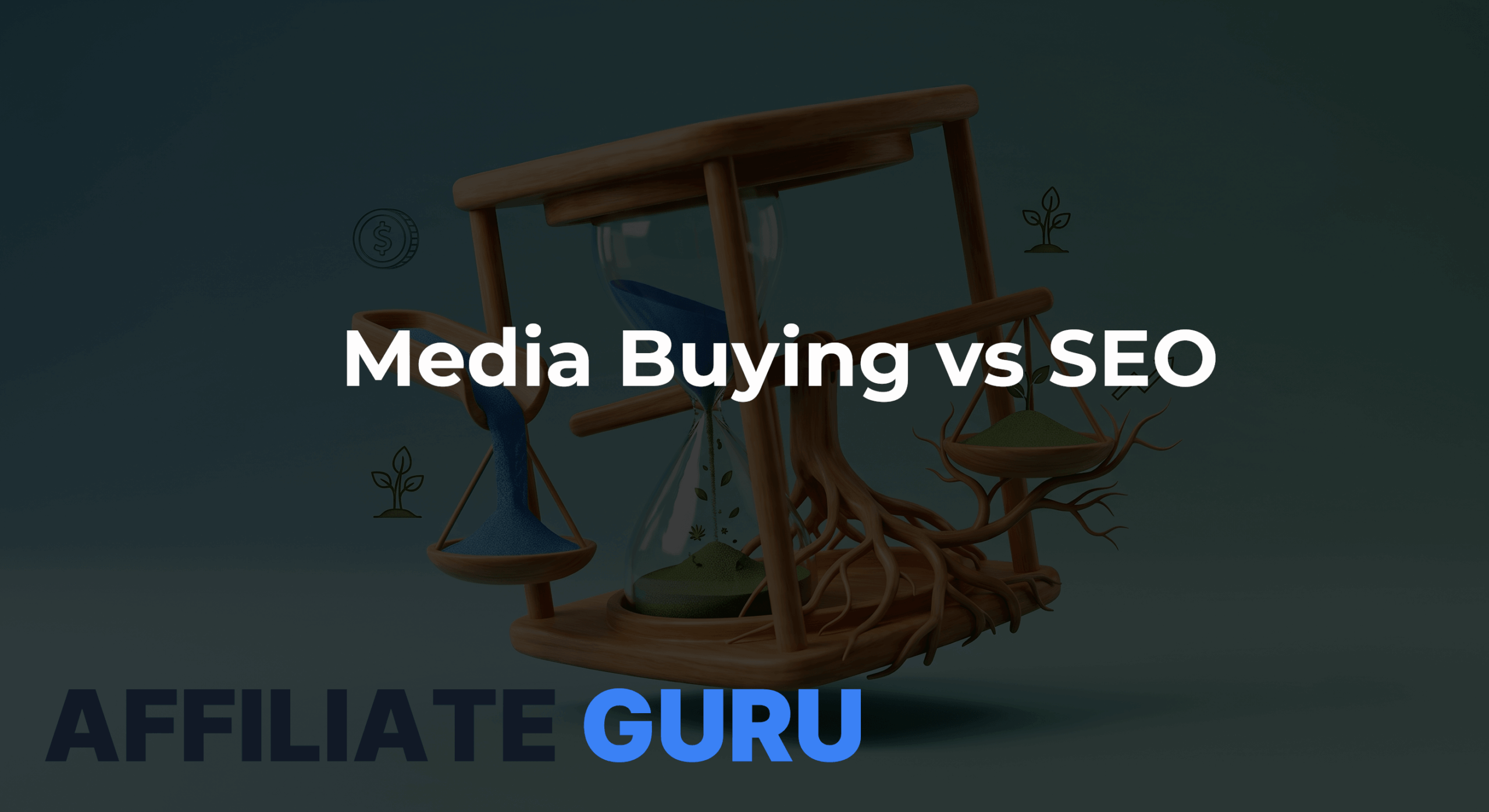
If we look at it without “ideal scenarios,” there is no clear winner between SEO and media buying in 2026. In the short term, paid traffic almost always delivers results faster: the first clicks, the first conversions, and an understanding of what works can appear within just 1–3 days. But this effect lasts exactly as long as you keep investing in traffic.
SEO is different. There’s no quick start here, but there is accumulation. Pages created today may start delivering tangible results in a few months and continue to perform without ongoing costs. That is why, in the long-term affiliate growth model, organic traffic often appears stronger, albeit slower at the start.
The answer depends not on the tool, but on the task. If you need quick results, media buying wins. If the goal is stable income and less dependence on the budget, SEO gradually takes the lead.
Why This Choice Matters: why this choice determines the outcome
Choosing between SEO and media buying isn’t just a technical decision. It determines how the entire project will develop: quickly and aggressively, or slowly and steadily.
The main differences are as follows:
- speed of traffic acquisition;
- level of control over campaigns;
- launch costs;
- stability of results;
- dependence on platforms.
But this is just a basic comparison.
In practice, it’s important to consider a few more things:
- how easy it is to scale;
- how the affiliate network operates;
- which social networks deliver results;
- whether the channel is suitable for a specific offer;
- what the competition looks like.
That is why media buying and SEO cannot be evaluated in isolation from their context. What works in one GEO or vertical may not work in another.
Ultimately, the right choice depends on the goal: a quick test or long-term growth.
Traffic Source Shapes Results: how the traffic source changes everything
The traffic source determines not only the volume but also the quality of the user. Paid traffic often delivers quick conversions but doesn’t always result in stable behavior. At the same time, organic traffic comes in more slowly but usually leads to better engagement.
This manifests through:
- different user motivation;
- different levels of trust;
- different depths of engagement;
- different conversion rates.
That is why in affiliate marketing, it is important not just to “drive traffic,” but to understand how it behaves after a click.
Speed And Stability Differ: speed versus stability: what’s the main difference
The main difference between these approaches is evident right from the start. Paid traffic offers speed: you can test an idea, change direction, and get results in just a few days. But this speed comes at a cost — as soon as the budget stops, the user flow drops almost instantly.
SEO, on the other hand, requires time and patience. The first results don’t appear immediately — sometimes it takes 2–3 months — but then traffic begins to flow steadily. It is this stability that creates a sense of a “system” where every page contributes to the overall result.
In practice, this comes down to a choice between a quick start and a long-term effect. One approach lets you start earning right away, while the other builds a foundation that works without constant intervention.
Where Media Buying Wins: where the paid approach really shines
Putting theory aside, media buying excels where speed and control matter. In practice, it’s simple: you launch a campaign — and within 24–48 hours, you can see what’s working and what isn’t. That’s exactly why this approach is often used for a quick start in affiliate marketing.
The key here isn’t just speed, but also the ability to immediately influence the results. You can change creatives, test different offers, and turn a profit in just a few days. In this format, affiliate growth happens much more dynamically than through other channels.
Paid Traffic Brings Faster Data: why data comes almost immediately
In media buying, you don’t wait for weeks. After just the first 100–300 clicks, you can see whether there’s a conversion or not. This allows you to quickly “cut out” weak links and avoid wasting your budget.
In fact, paid traffic provides not just traffic, but rapid feedback. And that’s exactly what makes it a powerful tool for testing, especially when you need to test a new offer or GEO.
Scaling Happens Much Faster: why scaling happens faster
When a campaign is working, it can be scaled almost immediately. In many cases, increasing the budget by 2–3 times is enough to achieve proportional growth in results.
That’s why different media buying is often used for aggressive growth. If a campaign is profitable, it isn’t dragged out over months — it’s “accelerated” while it’s working.
Where SEO Wins: where organic traffic delivers better result
SEO excels where stability and long-term revenue matter. There are no quick results here, but there is something else — a cumulative effect. What is created today can drive traffic in 3–6 months and beyond without additional costs.
This is the main difference: SEO isn’t about speed, but about building an asset. That’s why it’s often used in business models where it’s not just about making money, but about establishing a foothold in the market.
Organic Traffic Compounds Over Time: how the cumulative effect works
In SEO, results don’t come instantly, but over time they begin to “compound.” At first, this might be 50–100 visits per day; after 2–3 months, it could be 500+; and then growth becomes stable without additional investment.
This happens due to:
- the accumulation of pages in search results;
- growing trust in the site;
- improved rankings;
- increased internal traffic;
- the synergy effect between pages.
But most importantly — this process doesn’t reset to zero.
Unlike paid traffic, where stopping the budget means dropping to zero, organic traffic continues to work. That is why SEO is often viewed as a long-term asset, not just a traffic channel.
Content Turns Into An Asset: how content becomes a resource
In SEO, every page is not an expense but an investment. A single piece of content can drive traffic for months or even years if it matches the search query and provides value.
This manifests through:
- a steady flow of traffic;
- the ability to update the content;
- repeat conversions;
- strengthening the entire site;
- a long page lifecycle.
Сontent begins to function as an asset that accumulates value over time. This is precisely what distinguishes SEO from most other approaches in affiliate marketing.
The Main Trade-Offs: what compromises you’ll have to make
Choosing between SEO and media buying is always a balancing act. There is no perfect option; there are only different models with varying pros and cons.
The main trade-offs look like this:
- speed versus stability;
- cost versus time;
- control versus dependence on algorithms;
- the risk of rapid losses versus a long wait.
But this is just the surface level.
In real-world practice, things are more complex because each channel has its own nuances. And it is precisely these nuances that determine which approach will be more effective in a specific situation.
Media Buying Needs Constant Spend: why paid traffic “runs on a budget”
In media buying, results directly depend on spending. As long as there is a budget, there is traffic and conversions. As soon as funding stops, the flow of users drops almost immediately. This is because:
- platforms operate on an auction basis;
- competition is constantly growing;
- the cost per click fluctuates;
- campaigns need to be constantly updated;
- algorithms can change.
That is why paid traffic is not a one-time launch, but a continuous process of management and optimization.
SEO Needs More Time: why organic traffic doesn’t deliver quick results
SEO requires patience. In most cases, the first results appear no sooner than 1–3 months later, and stable growth comes even later. This is due to:
- indexing time;
- competition in the niche;
- dependence on algorithms.
But this drawback is offset by a long-term effect that is difficult to achieve through other means.
Both Come With Risk: why both approaches are risky
Both SEO and media buying have their risks, and they cannot be ignored. In one case, it’s rapid budget loss; in the other, it’s a slow decline in rankings.
The main risks are as follows:
- changes in search algorithms;
- blocking of advertising accounts;
- platform instability.
That is why the best results are usually achieved by those who do not rely on a single channel but combine approaches.
Which Model Fits Best: how to understand which approach is right for you
In 2026, the choice between SEO and media buying no longer comes down to “right or wrong.” It’s more about your work style and planning horizon. One approach delivers quick results and requires constant monitoring, while the other builds more slowly but becomes more self-sustaining over time. That’s why it’s important to look not only at potential revenue but also at how you plan to work on the project.
In practice, this choice is often determined by a few factors: your budget, your willingness to wait, and the level of risk you’re willing to take. If you can invest in traffic and test quickly, media buying makes sense. If, however, the goal is to build a system that doesn’t depend on daily expenses, then SEO becomes a more attractive option.
At the same time, it’s important to understand that the market has changed. Today, affiliate marketing is no longer about a single channel, but about the ability to adapt. Therefore, even if one main direction is chosen, in the long term, most people switch to a combined model. But the starting point still depends on what’s more important — speed or stability.
SEO Fits Long-Term Builders: why this approach is chosen by those who think years ahead
SEO is best suited for those who don’t expect results “here and now.” It’s an approach for those willing to invest time in content, structure, and website development, understanding that the results will come later but will be more stable. In this sense, SEO isn’t just a traffic channel but a way to build an asset.
As the website begins to climb the rankings, each new page functions not in isolation but as part of a system. Over time, a cumulative effect emerges: traffic grows, trust increases, and even small updates can yield tangible results. That is precisely why this approach often seems slow at the start but strong in the long run.
In the long term, SEO allows you to reduce dependence on external factors, such as budget or advertising platforms. This doesn’t mean there are no risks, but it does mean greater predictability. And it is this predictability that makes SEO the foundation for those building affiliate projects not for a few months, but for years.
Paid Traffic Fits Fast Testing: why it is the fastest way to test
In practice, paid traffic is used not only to generate revenue but also for rapid testing. In a “buying vs. affiliate” scenario, it’s simple: you launch a few variations and within 24–72 hours, you know what works. That’s exactly why this approach is often the first step in any new campaign.
What exactly does speed offer:
- the ability to get the first clicks within a few hours;
- quick comparison of creatives;
- testing different GEOs and audiences;
- verifying an offer without a long launch;
- flexible budget management.
But the key isn’t just in the launch.
After the first 200–500 clicks, the basic picture is already clear: is there conversion, or do you need to change your approach? This is exactly what makes paid traffic the ideal tool for testing before scaling.
Why A Hybrid Model Works: why combining approaches yields better results
In 2026, the strongest results come not from a single channel, but from a combination of them. When you combine affiliate marketing with SEO and media buying, you get both speed and stability at the same time.
This approach provides:
- a quick start through paid traffic;
- long-term growth through SEO;
- the ability to test and scale;
- reduced risks;
- a stable traffic flow.
But these are just some of the benefits.
In practice, the hybrid model allows you to use the global affiliate network more effectively because you aren’t dependent on a single source. If one channel slows down, the other continues to deliver results.
Additionally, this opens up several more opportunities:
- quickly transferring successful campaigns to SEO;
- scaling proven offers;
- optimizing costs;
- working with different traffic formats.
That is why today the combined approach is becoming the standard in affiliate marketing.
Paid Traffic Validates Offers: how to test offers before scaling
One of the biggest advantages of paid traffic is the ability to quickly determine whether an offer is worth pursuing. In the buying vs affiliate model, this acts as a filter: you don’t spend months on SEO until you’re sure the product converts.
This works through:
- quickly launching tests;
- analyzing initial results;
- preparing for scaling.
You get a proven connection that you can already transfer to SEO or scale through a global affiliate network without unnecessary risks.
SEO Scales What Converts: how organic search amplifies proven strategies
SEO works best not during the idea-generation phase, but once it’s clear what actually drives results. After an offer or strategy has demonstrated conversion through paid traffic, organic search allows you to scale that result without ongoing costs. In this sense, SEO acts as a scaling tool rather than a testing tool.
In practice, it looks like this: there is a proven direction that is already delivering stable results, and instead of constantly “pouring” money into the budget, work begins on content. Pages are created for specific queries, related topics are covered, and gradually a structure is formed that attracts relevant traffic. After 2–4 months, this flow begins to yield results, and thereafter — it functions as an independent source.
The key difference is that SEO doesn’t just add traffic; it amplifies what’s already working. If the funnel isn’t converting, organic traffic won’t “save” the situation. But if it’s proven to work, SEO allows you to reduce dependence on spending and make revenue more predictable.
That is why this approach is often used as a second stage: first, a quick test via paid traffic, and then gradual scaling through organic traffic. The result is a system where one channel provides speed and the other provides stability.